

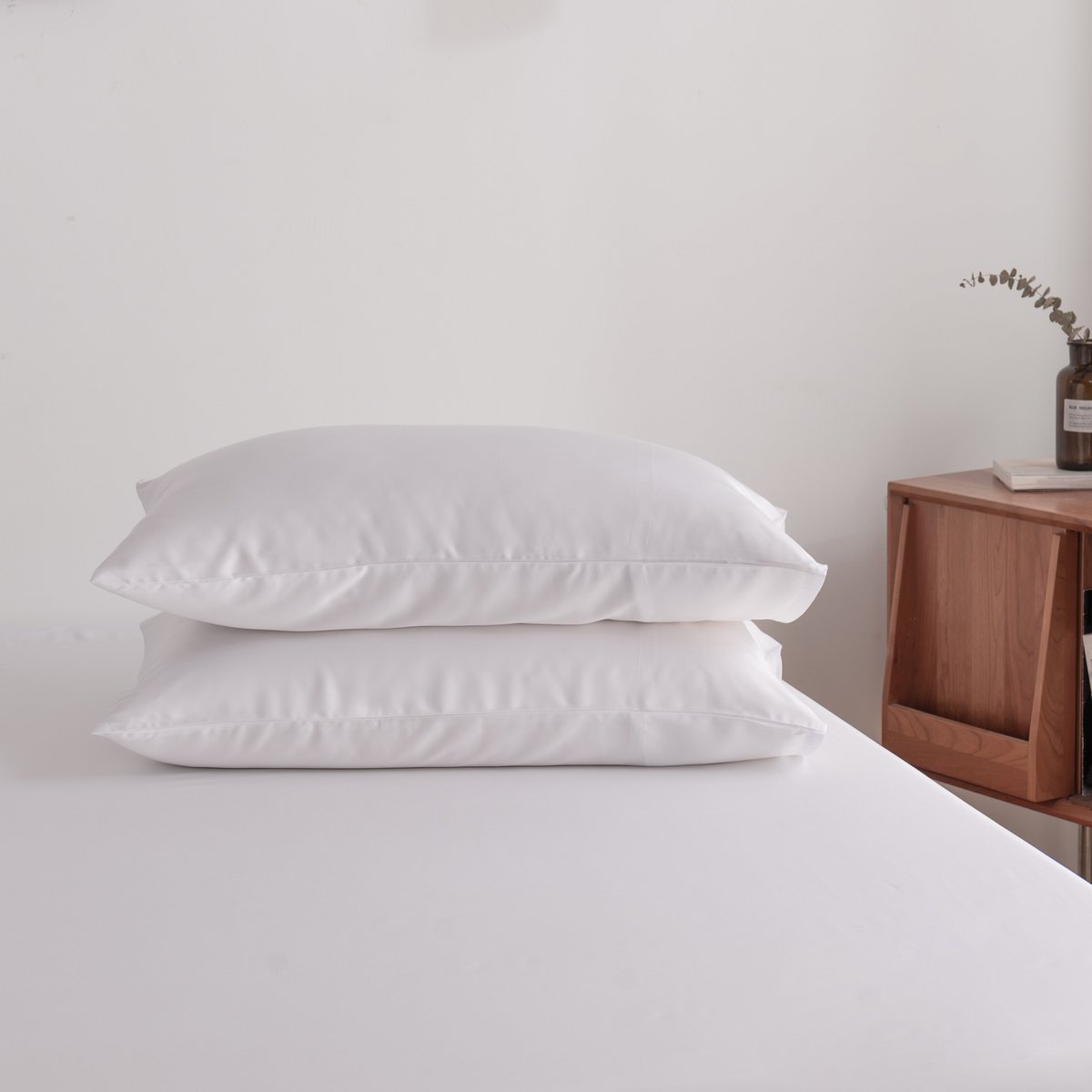
The moment new bed linen comes out of its packaging, the urge is to put it straight on the bed. Yet there's a step worth taking first: the initial wash. During production and on the way through warehouses and transport, finishing residue, dust and loose fibres collect in the fabric, regardless of the quality of the material. Washing it before first use removes these residues, lets the fibres settle and reveals whether a colour tends to bleed. Which temperature suits which material, from cotton to linen to muslin, you'll find below.
Why the first wash makes a difference
New bed linen straight from the packaging often feels stiffer than expected, and sometimes carries a faint smell of storage or transport. This comes down to processes every fabric goes through on its way from the loom to the shipping box. Weaving mills often use sizing agents, a kind of starch that protects yarns from friction during weaving. This finish initially remains in the fabric after production, making it firmer than it will later feel in use.
Add to that the journey through warehouses, freight and the shop shelf: textiles are folded, packaged, transferred between vehicles and sometimes stored in rooms with fluctuating climate conditions. Fine dust and loose fibres settle into the fabric along the way, even with careful packaging. As a result, the fabric comes into contact with skin far cleaner after a first wash.
Testing colourfastness before it matters
Dark or bold colours can release a little dye during the first wash, especially with natural fibres such as cotton or linen, which absorb dyes differently than synthetic fibres. For this reason, wash new bed linen separately from other laundry, at least for the first one or two washes. This helps avoid a new cover discolouring light towels or white underwear. A quick glance at the care label shows whether the manufacturer recommends a specific temperature or a gentle cycle.
The right washing temperature by material
Not every material tolerates the same treatment. The fibre type determines how hot the water may be and how sensitively the fabric reacts to spinning and tumble drying.
Cotton (percale, sateen, flannel)
Cotton fabrics such as percale or sateen generally tolerate 40 to 60 degrees Celsius, depending on the label. Densely woven percale stays stable in shape at this temperature, while more delicate sateen qualities keep their sheen longer at lower degrees. Natural fibres like cotton can shrink slightly during the first wash, usually in the low single-digit percentage range, which is a normal part of the fibres relaxing.
Linen
Linen is more robust than many expect, but it is sensitive to high spin speeds and heavy mechanical strain. 30 to 40 degrees is usually enough for the first wash. Linen fibres soften with every wash, an effect that is explicitly desired with this material and continues over months.
Muslin
The loose, multi-layered weave makes muslin especially airy, but it can't tolerate high temperatures. A gentle cycle at 30 to 40 degrees protects the loose weave structure. Muslin shrinks slightly when washed, developing its characteristic, slightly crinkled surface that isn't present before the first wash.
Blended fabrics
Blended fabrics made of cotton and synthetic fibres are generally easier to care for and less prone to shrinking. The manufacturer's instructions on the label remain the most reliable source here, as the fibre mix varies by product.
Practical tips for the first wash
- Wash new bed linen separately by colour the first time, don't mix dark and light tones.
- Skip fabric softener, especially with linen and muslin: it coats the fibres and reduces the fabric's natural absorbency and breathability.
- Don't overfill the machine, so water and detergent reach the fibres evenly.
- Check the care symbols on the label before setting temperature and spin speed.
- Dry delicate qualities such as sateen or muslin at low temperature or air-dry them to preserve sheen and structure.
Care after the first wash
After the first wash, bed linen mainly needs regularity. As a rough guideline in textile care, duvet covers and sheets should be washed roughly every one to two weeks, pillowcases possibly more often depending on use. Linen is easiest to iron while still slightly damp, since dry linen offers considerably more resistance when smoothing. Sateen and percale keep their sheen and smooth surface best, respectively, when they aren't constantly washed and dried at high heat.
Anyone with several materials in the household, say linen for summer and heavier cotton qualities for cooler months, benefits from keeping the respective care labels handy or noting down the values once. This saves having to look them up again on the next wash day and extends the lifespan of the textiles at the same time.
Washing recommendations for new bed linen by material
| Material | Washing temperature (first wash) | Spin speed | Fabric softener recommended? |
|---|---|---|---|
| Cotton (percale/sateen) | 40–60 °C | 800–1200 rpm | No |
| Linen | 30–40 °C | 600–800 rpm | No |
| Muslin | 30–40 °C (gentle cycle) | ≤600 rpm | No |
| Blended fabrics | per care label | per care label | Possible in moderation |
Matching products


Why Maison de Cocon
- Our bed linen collection includes linen and muslin, among other things, two materials with different care requirements.
- Each product comes with care information including the recommended washing temperature, so the first wash matches the specific material.
- Our bed linen follows standard European sizing, which makes it easier to choose the right set.
- We describe the material properties of cotton, linen and muslin, so you can gauge the care differences before buying.
Bed Linen · what to consider when buying linen bedding · what's behind the muslin bedding trend




Leave a comment
All comments are moderated before being published.
This site is protected by hCaptcha and the hCaptcha Privacy Policy and Terms of Service apply.